My Book Wins GOLD!

Many, many thanks to the Independent Publishers of New England (IPNE) for bestowing a GOLD award for my book, Critical Thinking Now! Practical Teaching Methods for Classrooms Around the World!

The jacket copy states: Today’s curricula can (and should) incorporate critical thinking methods because they are the means by which people best understand, learn, and retain higher level concepts. Contrary to what many professional trainers assume, teaching critical thinking is not achieved by shoveling facts at an audience through lecturing or multiple choice testing. It requires sustained, finely tuned teaching and assessment methods. This book lays out a blueprint to do just that.

Published in 2016 by Rowman & Littlefield, it includes information about my experiences teaching critical thinking in Kazakhstan, Russia, and elsewhere. Many exercises show how to get around an authoritarian mindset that can scuttle a teacher’s effort to develop critical thinking. It also explains how so-called Western societies have developed critical thinking, which began in Greece with Socrates, while Asian countries followed the Confucianist model of education.

https://rowman.com/ISBN/9781475827538/Critical-Thinking-Now-Practical-Teaching-Methods-for-Classrooms-around-the-World

Visit IPNE’s site that describes its process for judging books https://www.linkedin.com/posts/the-book-awards-at-ipne_authors-publishing-bookawards-activity-7287905769520279552-ZX2V/

Water Your Brain with Upcoming Critical Thinking Talks

The Association for Informal Logic and Critical Thinking (AILACT) presents talks every first Friday. On January 10 at 1pm (ET) (this one was delayed), Catarina Dutilh Novaes will present Against ‘Reason Supremacism’ in Democratic Politics. Go to https://ailact.wordpress.com for lots of information and downloadabale access to the second edition of Studies in Critical Thinking J. Anthony Blair (ed.). The site also lists extended information about Novaes’ and other upcoming talks. You’ll also find recordings of past presentations.

Critical Thinking in the Workplace

The skinny:

Critical thinking is a strange bird: We all know it when we see it, but its definition is hard as heck to pin down. So, when employers say they want their employees to be critical thinkers, how’s that working out for them?

This link to a 2024 article from Insight Assessment explains with lots of charts just exactly what is going on in the workforce vis-à-vis critical thinking. https://insightassessment.com/iaresource/what-the-critical-thinking-data-tells-us-workplace-examples/

What Skills Are Employers Looking for Now?

The attributes that employers are looking for are changing. AILACT (Association for Informal Logic & Critical Thinking https://ailact.wordpress.com/) has posted several articles about this topic. The upshot is that their emphasis in hiring is less on technical skills and more on soft skills (including many that are subsumed under critical thinking):

https://www.naceweb.org/talent-acquisition/candidate-selection/the-key-attributes-employers-are-looking-for-on-graduates-resumes

In descending order of importance:

  • A strong work ethic;
  • Written and verbal communication skills;
  • Analytical/quantitative skills;
  • Flexibility/adaptability; and
  • Technical skills.

Check out these other articles with graphs and stats illustrating the shift over time of how employers are shifting their emphasis of hirees”

Leadership in Engineering: What It Is & Why It’s Important

https://online.hbs.edu/blog/post/leadership-in-engineering

How College Contributes to Workforce Success

https://www.fierce-network.com/leadership/how-college-contributes-workforce-success#:~:text=Lastly%2C%20a%20few%20key%20takeaways%20from%20the%20report,in%20the%20preparation%20of%20college%20graduates%20for%20work.

What Should Students Get Out of a Course on Critical Thinking?

Peter Facione (www.measuredreasons.comhas researched, written about, and taught critical thinking for over 50 years. Below are 11 skills Facione hopes students will acquire from a course focused on critical thinking:

  1. Come to well-reasoned, reflective judgments about what to believe or what to do.
  2. Correctly analyze problems and develop effective problem-solving strategies.
  3. Interpret information correctly to make informed decisions.
  4. Draw sound and reasonable inferences.
  5. Evaluate arguments and credibility of sources for robust decision-making.
  6. Persuasively explain reasoning for your point of view, enhancing your communication skills.
  7. Make sound and thoughtful decisions in your personal and professional life.
  8. Protect themselves from being misled by rhetorical tricks and fallacies.
  9. Strengthen their ability to reason well with quantitate information.
  10. Learn how to use and evaluate comparative, ideological, and scientific thinking.
  11. Discover the risks and benefits of reactive and reflective thinking.

Facione also offers an array of material he calls Skill BuildersDeep Dives, and Mindset Boosters for teachers and students at https://insightbase.com/products.

Video about Disinformation, Denialism, and the Assault on Truth

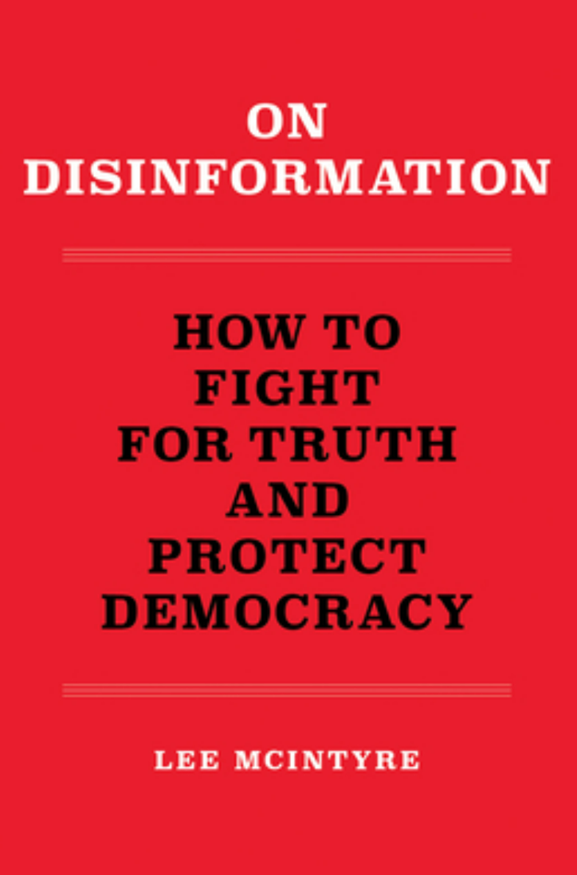
I belong to AILACT (Association for Informal Logic & Critical Thinking https://ailact.wordpress.com/). Every month, a speaker talks about an issue in critical thinking. The one posted below by Lee McIntyre, Research Fellow, Center for Philosophy and History of Science, Boston University, was particularly interesting. Here is his description of the topic:

“Disinformation is the scourge of the information age, causing both science denial (climate denial, anti-vaxx, etc.) as well as the more recent “reality” denial (Trump’s claim that the 2020 election was stolen, Q-Anon conspiracies, etc.) People do not wake up one day and wonder whether there are tracking microchips in the Covid vaccines or a Jewish space laser causing the California wildfires. They are led to those ridiculous, false beliefs through strategic lies, told by those who created them, in service of their own economic, ideological, or political interests. The problem, however, is that once disinformation is in the information stream, it does not just tempt someone to believe a falsehood, but also polarizes them around a factual issue, which undermines trust and poisons the path by which they might revise past beliefs and embrace future ones. How to address this? Engaging with deniers is one path, and a recent study by Betsch and Schmid (NATURE, 2019) provides the first empirical evidence that science deniers can sometimes be led to give up their false beliefs. Most intriguing, one of the methods for doing this has nothing to do with the content of the belief itself, but focuses instead on the path of reasoning that led them to it. “Technique rebuttal” thus provides a ray of hope for philosophers and other non-scientists to address science (and reality) denial, even if they are not content experts on the topic of denial. But there is a hitch. This method doesn’t always work and it is slow. What might work better? In my new book ON DISINFORMATION, I claim that the pinch point on the disinformation highway from creation to amplification to belief is to clamp down on the spread of disinformation. In my talk, I will outline several methods by which ordinary citizens might participate in these efforts.”

How Can You Change Someone’s Mind

This image has an empty alt attribute; its file name is ted-ed-talk.png

This short TED-Ed talk by Hugo Mercier (4:27 minutes), How Can You Change Someone’s Mind, talks about three elements that will help when you want to discuss delicate or controversial topics. The three elements are 1) shared beliefs, 2) trusted sources, and 3) values. His presentation is elegant but goes fast. But it is an ideal springboard for teachers to discuss how to take these three components into account when talking to someone with differing views. And as Mercier states, you might end up changing your own mind!

https://bit.ly/3z0ZBoF

Conference Opportunities

Dear critical thinker: I am posting to alert you to two upcoming (soon!) conferences that might interest you.

The Critical Thinking Consortium (tc2.ca) will hold a zoom call on leadership on May 13. To register: go to http://Register and pay for the conference. It is a very active organization and has many resources (some are free) such as an online library and many others for a nominal membership fee to help you integrate critical thinking into your classes.  

The Foundation for Critical Thinking (cct@criticalthinking.org) is offering a webinar on May 18 on “Why the concept of critical thinking is in danger and why it needs to be established as an independent academic field of study.” To register, go to Webinar Q&A Sessions in the Center for Critica (criticalthinking.org) and to read about the other offerings.

Using Rubrics to Assess Critical Thinking

Assessing critical thinking has been a bugbear for teachers for years. After all, critical thinking is not like a problem in math or historical fact with a discrete answer. It’s a global, all-encompassing thinking pattern. Enter the time-honored rubric—a way to measure progress toward that goal.

Continue reading “Using Rubrics to Assess Critical Thinking”
Caitlin Johnstone

Daily Writings About The End Of Illusions

LET'S MOSEY ON

A Moving Account

Straw Clay Wood

Natural Building with Michael G. Smith

Seattle Muses

Conscious Fashion Studio

QA Productions

Ebooks = Real Books